

Just when we thought Roomba might have been swept into the dustbin of tech history, iRobot has burst back onto the scene with its biggest product launch ever: eight brand new Roomba models hitting shelves in mid-2026. After emerging from bankruptcy under new Chinese ownership, the company that invented robot vacuums 23 years ago is making a bold play to reclaim its throne in a market it once dominated.
The new Roomba lineup spans from the compact £229 Roomba 115 to the flagship £799 Roomba Max 775 Combo, with US pricing still to be confirmed. It’s the most comprehensive refresh in Roomba’s history, arriving at a crucial moment when the brand desperately needs to prove it can still compete with the likes of Roborock, Shark, and Eufy.
Eight Models Spanning Every Budget and Home Size
The new models break down into three distinct tiers, each targeting different household needs:
Entry Level:
- Roomba 115 (£229)
- Roomba 415 Combo
- Roomba 515 Combo
Mid-Range Plus Models:
- Roomba 575 Plus
- Roomba 615 Plus
- Roomba 675 Plus
Premium Max Series:
- Roomba Max 715
- Roomba Max 775 Combo (£799)
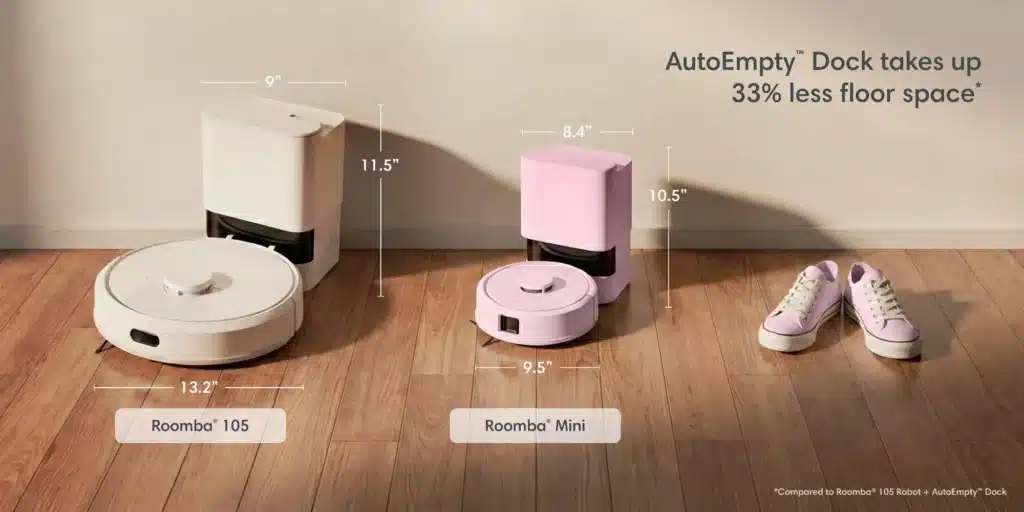
The standout feature across the range is a dramatic shift toward smaller, more compact designs — something families with tight spaces and furniture-heavy homes will appreciate. But don’t mistake smaller for weaker. iRobot claims the top-tier Max models deliver up to 30,000Pa of suction power, which would put them firmly in flagship territory alongside premium competitors.
Now, 30,000Pa is a number we’ve heard thrown around by everyone from Dreame to Tineco lately, so color me cautiously optimistic. That said, if iRobot’s new models actually deliver that kind of sustained suction with their traditionally reliable navigation, it could be a genuine game-changer for pet owners dealing with embedded fur and families tackling high-traffic areas.
Roomba has historically avoided the Pascal arms race entirely, preferring their own “Power-Lifting Suction” measurements — often cryptic claims like “10x more power” that left us guessing. This shift to industry-standard Pa ratings suggests the new ownership is taking a more transparent, competitive approach.
How iRobot Got Here: From Market Leader to Bankruptcy
To understand why this launch matters, we need to rewind through iRobot’s recent struggles. The company that created an entire product category found itself increasingly squeezed by Chinese manufacturers offering similar features at lower prices. Amazon’s failed $1.7 billion acquisition attempt in 2022 highlighted the brand’s value, but also its vulnerability.
By late 2025, iRobot had filed for bankruptcy, with its stock price having fallen from highs of over $130 in 2021 to single digits. Innovation had stagnated while competitors like Roborock pushed boundaries with self-emptying docks, advanced mapping, and aggressive pricing.
The acquisition by its primary Chinese manufacturer represents both an end and a beginning. While it’s always bittersweet to see an American innovation icon change hands, the new ownership clearly understands what Roomba needs to compete in 2026’s brutal robot vacuum landscape.
Pet Owners Finally Get the Power They’ve Been Asking For
For busy families, the most compelling aspect of this relaunch isn’t just the expanded range — it’s the return of genuine choice in the Roomba ecosystem. The compact Roomba 115, positioned alongside the recently launched Roomba Mini, gives apartment dwellers and smaller homes options that won’t dominate their floor space or storage.
Pet owners should pay close attention to the Max 775 Combo. The promise of “stronger pet-hair pickup” combined with odor-reducing bags and enhanced filtration could address long-standing complaints about pet hair management that have driven many families toward competitors. Pet hair performance has always been a crucial factor for Roomba buyers, and if the new models can match Shark’s pet-specific features or Roborock’s tangle-free rollers, it would mark a significant step forward.
The phased rollout beginning with the 415 and 115 Combo models suggests iRobot is prioritizing the sweet spot of the market — capable cleaning at accessible prices. For families considering whether robot vacuums can replace traditional cleaning, these mid-range options could provide the performance threshold where that transition finally makes sense.
The Market Has Moved On… Maybe Too Far
While this launch represents iRobot’s most aggressive move in years, the robot vacuum market has evolved dramatically during their dormant period. Competitors aren’t just matching traditional vacuuming anymore — they’re adding arms for object manipulation, stair-climbing capabilities, and integrated home security features.
Companies like Matic and even ambitious startups are exploring robots that can handle multiple household tasks beyond floor cleaning. The question becomes whether focusing purely on better vacuuming is enough when the market is moving toward multi-function home robots.
That said, the robot vacuum market still needs Roomba as an active, innovative player. Competition drives better features, fairer pricing, and more reliable products for everyone. The brand recognition alone — Roomba remains synonymous with robot vacuums for many consumers — gives them a seat at the table that newer brands would kill for.
The risk is arriving as a follower rather than a leader. These new models sound competitive with 2025’s best sellers, but in a market where Chinese manufacturers iterate every six months, being competitive today doesn’t guarantee relevance tomorrow.
A Genuine Comeback or Just Better Marketing?
This relaunch feels different from iRobot’s previous half-hearted attempts to match competitors’ feature lists. The comprehensive range, honest performance metrics, and smaller form factors suggest a company that’s actually listened to user complaints and market feedback.
For budget-conscious families, the sub-£300 options could provide the Roomba reliability they want without premium pricing. For larger homes with pets, the Max series promises the power levels that competing flagships have been delivering for years.
The real test will be real-world performance and whether the new ownership can maintain iRobot’s historically strong software updates and customer support while competing on price. If they can pull it off, this could be the start of Roomba’s second act rather than just a final curtain call.
Mid-2026 can’t come fast enough — this is one comeback story worth following.
FAQ
Q: When will the new Roomba models be available?
A: The new Roomba lineup is scheduled to launch in mid-2026, with a phased rollout starting with the 415 and 115 Combo models.
Q: How much will the new Roombas cost in the US?
A: US pricing hasn’t been confirmed yet. UK pricing ranges from £229 for the Roomba 115 to £799 for the flagship Max 775 Combo.
Q: What’s different about these new Roomba models?
A: The main changes include smaller, more compact designs, significantly higher suction power (up to 30,000Pa), and transparent Pascal ratings instead of iRobot’s previous proprietary measurements.
Q: Are these models better for pet hair?
A: The Max series, particularly the 775 Combo, promises enhanced pet hair pickup with improved filtration and odor-reducing bags, though real-world performance remains to be tested.
Q: Who owns iRobot now?
A: Following bankruptcy in late 2025, iRobot was acquired by its primary Chinese manufacturing partner. The company is no longer American-owned.